Case Study

Turning a 2030 vision into a plan the team could actually run.

Maya Angelou Schools and See Forever Foundation·Advisory·Washington, DC·2025
19
Board-level KPIs in one scorecard covering instruction, transitions, well-being, and sustainability
4
Strategic priorities, every KPI tied to one and assigned to a named owner
7
Accountability measures mapped to OSSE indicators ahead of DC ratings

Maya's team did the hard part. They committed to a real five-year direction. Our job was to make that direction survive contact with a Tuesday: what gets done this quarter, who owns it, and which numbers tell the truth about whether it is working.

Mike Montoya, Founder and CEO, Stronger Consulting
The Challenge

A vision with no translation layer

In June 2025, the board of Maya Angelou Schools and See Forever Foundation approved Thriving: Our Journey to 2030, a five-year strategic plan spanning instruction, well-being, scholar transitions, professional practice, and national leadership. The organization has served opportunity and justice-involved youth in Washington, DC since 1997. Staff showed strong alignment to the vision and real pride in Maya's national standing, alongside much lower confidence that current tools and systems could carry the plan into daily practice.

First
A five-year plan with no first year.

The approved plan set direction across five strategic domains but did not define what had to happen in the first twelve months, who owned each commitment, or how progress would be judged.

Then
Scorecards that measured activity, not outcomes.

Leadership scorecards captured a long list of tactics rather than a small number of quantifiable driving goals, creating a risk of reporting inputs while accountability goals went unmet.

Also
Growth that had outpaced role clarity.

As the organization expanded in size and complexity, staffing models, reporting lines, and cross-functional communication had not caught up with the 2030 ambition.

The Approach

The Stronger approach

First
A discovery sprint built on staff and leadership voice.

Reviewed the approved plan and board feedback, ran a network-wide staff survey, and conducted one-on-one leadership interviews, synthesized into a discovery memo with a SWOT analysis, named risks and misalignments, a resource gap analysis, and a staff capacity-to-strategy alignment matrix.

Then
A short list of measures built for the students Maya actually serves.

Standard proficiency metrics undercount scholars who arrive credit deficient, court involved, or re-engaging after gaps in schooling. The framework pairs growth and participation measures with proficiency, sets year one targets at verified baselines, and steps targets forward through SY 2029 to 2030.

Next
Ownership and governance designed into the framework.

Each KPI carries a named owner, either the CEO or a vertical chief, with an annual review calendar timed to the OSSE STAR release cycle, a defined process for mid-course recalibration with written rationale, and explicit board asks to anchor future reporting.

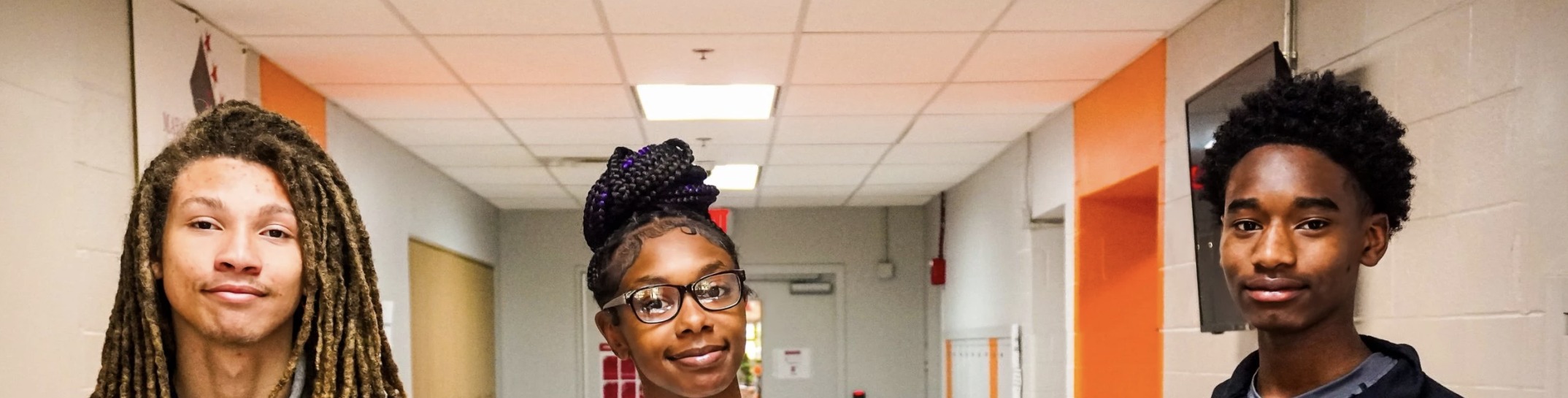
Maya Angelou Schools students
Twenty-Nine Years of Second Chances

Maya Angelou Schools and See Forever Foundation has served opportunity and justice-involved youth in Washington, DC since 1997, across youth, adult, detention, and community settings. A five-year vision is only as strong as the first year of work behind it and the handful of numbers that tell you whether it is holding, and that structure is what lets a scholar population that standard metrics too often miss get counted, and served, accurately.

The Outcomes

What Maya Angelou Schools gained

A written account of the real constraints
The discovery memo gave leadership one place to see risks, misalignments, resource gaps, and capacity constraints, including where senior capacity was missing against state accountability analytics, strategy oversight, and staff well-being.
Nineteen numbers in place of an unbounded activity list
A single board-level scorecard replaced activity-based reporting. Every KPI is tied to one of four strategic priorities, so no priority goes unmeasured and no metric floats free of the strategy.
Early warning on DC accountability
Seven internal measures are mapped to OSSE indicators across achievement, growth, and school quality, six to current STAR measures and one to an on-track credit accumulation indicator OSSE has under consideration. The board can see how the organization is likely to rate before results are published.
Accountability that does not depend on personality
Ownership is distributed from the board to the CEO to the vertical chiefs, with targets, review cadence, and recalibration rules written down, so the structure holds through staffing changes.

Our unique population of scholars often falls outside standard measures for student success. Regular reporting made our schools' progress either invisible or appear less than adequate. Our new framework reflects who we actually serve. It also helps us more effectively convey the value that Maya Angelou brings to the public education sector here in D.C. by speaking the District's language.

Clarisse Mendoza Davis, CEO, Maya Angelou Schools and See Forever Foundation

Is your organization ready for its next chapter?

Stronger Consulting partners with mission-driven organizations to turn complex challenges into clear, practical action, from strategy through implementation.

Back to all case studies
Let's talk.